Transaction Velocity Mapping Tracks Loyalty Milestones in Portable Live Table Sessions

Transaction velocity mapping connects the speed of player deposits, wagers, and cashouts directly to loyalty milestone tracking during live dealer sessions on mobile devices, and operators apply this approach across blackjack, roulette, and baccarat tables to monitor engagement patterns in real time.
Core Elements of Transaction Velocity in Live Gaming
Transaction velocity measures the rate at which funds move through a player's account during a single session, and systems record each deposit-to-bet cycle along with withdrawal requests to build a velocity profile for that user. Data from portable devices shows that players who complete three or more funding actions within a 30-minute window often reach the first loyalty tier faster than those with slower patterns, according to industry analytics platforms.
Live table environments add another layer because bet sizes fluctuate with table limits and dealer pace, while mobile sessions capture these changes through API calls that log every action timestamp. Researchers at academic institutions have noted that velocity spikes frequently occur after a player wins a hand and immediately places a larger follow-up wager, creating a measurable acceleration in account activity.
Loyalty Milestones Triggered by Velocity Data
Loyalty programs assign milestones based on cumulative activity thresholds, and velocity mapping helps platforms identify when a player crosses into the next reward bracket during an ongoing mobile session. For example, a user who maintains an average transaction interval under two minutes across ten consecutive bets may unlock instant free bet credits without leaving the table interface.
Operators integrate these triggers with live dealer software so that milestone notifications appear as subtle overlays rather than disruptive pop-ups, preserving the flow of the game. Figures released by state regulatory bodies in Nevada indicate that such integrated systems increased repeat mobile session lengths by measurable margins in the first half of 2026.
Mobile Session Dynamics and Portable Tracking
Portable live table sessions differ from desktop play because players switch between Wi-Fi and cellular networks, and velocity mapping accounts for these connectivity shifts when calculating transaction timing. A dropped connection mid-bet can reset part of the velocity score, prompting systems to flag the session for review before awarding the next loyalty step.
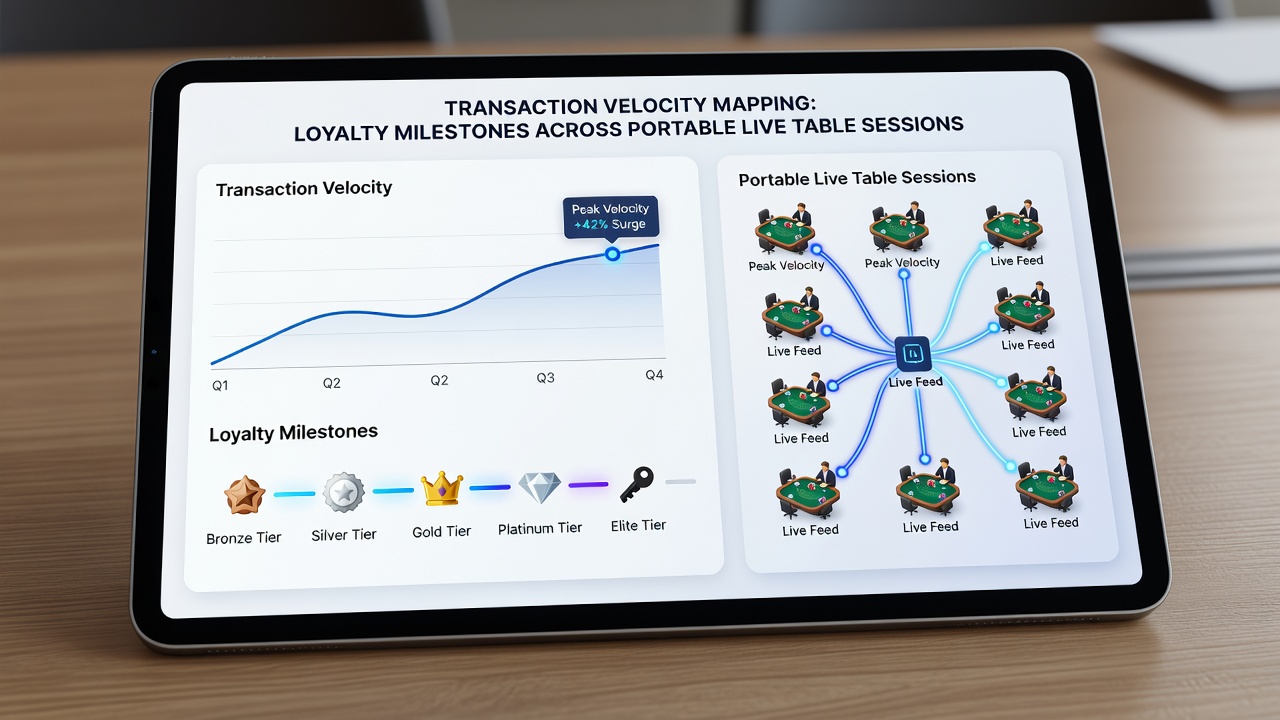
Device sensors also feed into the mapping process, with location data and screen interaction rates helping distinguish between casual browsing and active betting sequences. Those who have studied mobile gambling patterns observe that sessions lasting between 45 and 90 minutes produce the clearest velocity signatures for milestone progression, while shorter bursts rarely accumulate enough data points to trigger higher tiers.
Technology Behind the Mapping Process
Mapping platforms combine real-time payment gateway logs with game server timestamps to create a unified velocity score, and this score updates continuously as the live dealer round progresses. Machine learning models compare the current session against historical player data to predict when a loyalty milestone is likely to occur, allowing the system to prepare rewards in advance.
Integration with external processors remains essential, and reports from the Nevada Gaming Control Board highlight how secure API handshakes maintain accuracy across multiple funding methods during extended mobile sessions. June 2026 updates to these protocols emphasized reduced latency in velocity calculations, which operators adopted to keep milestone tracking aligned with live table pacing.
Regional Approaches and Industry Standards
Different jurisdictions apply varying rules to velocity-based loyalty features, and Canadian provincial regulators require explicit player consent before mapping transaction data for reward purposes. Australian oversight bodies have published guidelines that separate velocity metrics from responsible gambling tools, ensuring the two systems operate independently even when housed on the same platform.
Trade associations such as the European Gaming and Betting Association have compiled best-practice documents that recommend transparent velocity thresholds so players understand exactly what activity advances their loyalty status. These documents stress that mapping should remain session-specific rather than account-wide to avoid conflating separate mobile sessions.
Conclusion
Transaction velocity mapping continues to refine how loyalty milestones register during portable live table sessions by linking payment speed directly to reward triggers. Regulatory updates scheduled for later in 2026 are expected to standardize data formats across more regions, which will allow smoother cross-platform tracking while maintaining compliance boundaries. The combination of real-time logging, mobile sensor input, and predictive modeling keeps the process aligned with actual player behavior at the tables.